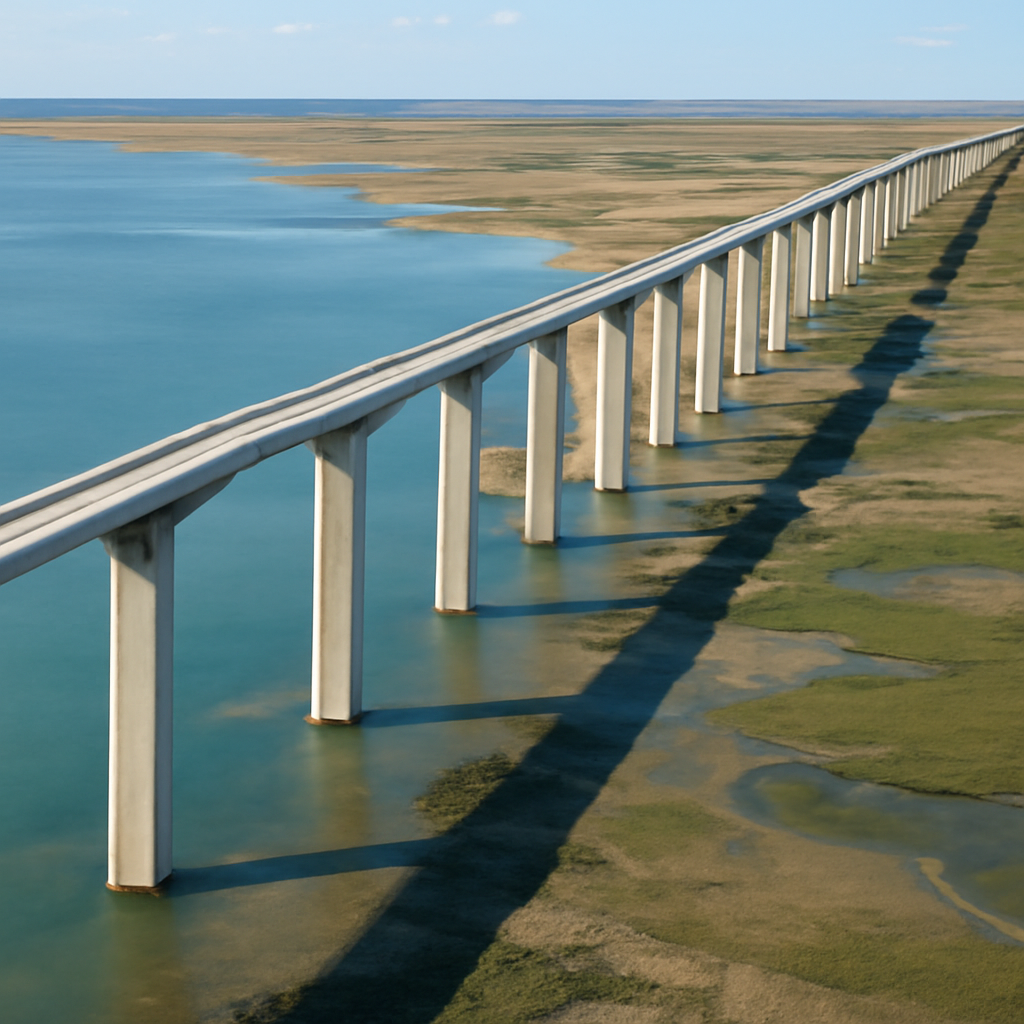
World’s Longest Bridges: Record-Holder Mega Spans (And What Makes Them Engineering Marvels)
Explore the world’s longest bridges and mega viaducts, including key record-holders, how total length differs from longest span, and the engineering techniques behind mile-long bridge systems.
From sea-crossing causeways to city-to-city viaducts, the world’s longest bridges are less about a single dramatic “span” and more about total length: miles of elevated structure designed to glide over water, wetlands, floodplains, rail corridors, and dense urban fabric. This guide highlights the best-known record-holders and explains how engineers make these mega spans durable, safe, and buildable at extreme scale.
Longest Bridge vs. Longest Span: Why Records Can Be Confusing
When people say “longest bridge,” they usually mean total length from end to end. But many famous bridges are record-setters in a different category: the longest main span (the distance between major supports on a suspension or cable-stayed bridge). The world’s longest total-length bridges are often viaducts made of many shorter spans, optimized for repeating construction and efficient foundations across soft ground or water.
- Total length record: typically multi-span viaducts and sea-crossing link roads.
- Longest main span record: typically suspension bridges designed for wide, deep, high-traffic shipping channels.
- Why it matters: a bridge can be “longest” overall without having any single extremely long span.
Current Total-Length Record-Holder: Danyang–Kunshan Grand Bridge (China)
The Danyang–Kunshan Grand Bridge is widely recognized as the world’s longest bridge by total length. Part of the Beijing–Shanghai High-Speed Railway, it carries high-speed trains across the low-lying Yangtze River Delta region, where long elevated structures help maintain straight, high-speed alignments while minimizing disruption to roads, waterways, and farmland. Its design relies on extensive viaduct segments supported by frequent piers—an efficient approach for very long distances over soft ground.
Other Notable Mega-Span Record Holders (Total Length)
Several other bridges are frequently cited among the world’s longest by total length. While rankings can vary by how approach viaducts are counted, the structures below are consistently recognized as major record-holders or near-record-holders due to their extreme end-to-end distance and the complexity of building across water, marshes, and busy coastal zones.
- Changhua–Kaohsiung Viaduct (Taiwan): A major high-speed rail viaduct built to withstand seismic risk and keep trains on a straight, elevated alignment.
- Tianjin Grand Bridge (China): Another Beijing–Shanghai High-Speed Railway mega-viaduct spanning a long corridor between major cities.
- Weinan Weihe Grand Bridge (China): A very long rail bridge/viaduct crossing river plains and infrastructure corridors in Shaanxi province.
- Hong Kong–Zhuhai–Macau Bridge system (China): A sea-crossing link that combines bridges with an immersed tunnel section and artificial islands to keep shipping lanes open.
Iconic “Over Water” Giants: Lake Pontchartrain Causeway (United States)
For long, uninterrupted stretches over open water, the Lake Pontchartrain Causeway in Louisiana is a standout. It consists of two parallel bridges crossing Lake Pontchartrain and has long been recognized for its remarkable length over water. Built largely from repetitive spans and piers, it demonstrates the classic approach to building very long causeways: standardized units, straightforward geometry, and construction methods that can be repeated efficiently for miles.
Longest Main Span vs. Longest Bridge: The Suspension-Bridge Record Context
If your interest is the “biggest single leap,” look to the longest main span category (typically dominated by suspension bridges). These bridges are engineering feats in aerodynamics, cable technology, and tower design, enabling a single span to cross wide shipping channels without mid-channel supports. The record for longest main span has changed over time as new bridges open; for the most up-to-date holder, consult official bridge authority sources or reputable engineering references.
How Engineers Build Bridges That Run for Miles
The defining trick of the longest bridges is repetition with rigorous quality control. Rather than inventing a unique structure for every meter, designers choose a span length that balances material efficiency, foundation feasibility, and constructability—then repeat it thousands of times.
- Standardized spans: Using the same girder or segment design reduces cost and accelerates production.
- Precast and segmental construction: Segments can be cast offsite or in dedicated yards, then assembled rapidly on location.
- Foundation strategy: Pile foundations and cofferdams are selected based on soil, water depth, currents, and seismic risk.
- Movement and resilience: Expansion joints, bearings, and seismic devices manage temperature change, wind, and earthquakes.
- Durability details: Concrete mix design, corrosion protection, drainage, and inspection access are critical over decades.

Why So Many Record-Long Bridges Are Rail Viaducts
High-speed rail corridors often favor long viaducts because trains perform best on gentle curves and steady grades. Elevating the alignment can reduce conflicts with roads and waterways, limit level crossings, and avoid settlement-prone soils through deep foundations. The result is a bridge that functions as an elevated rail “platform” for tens of miles—ideal conditions for total-length records.
Planning, Environment, and Operations at Mega Scale
At record length, a bridge becomes a system: drainage networks, lighting, monitoring sensors, maintenance access, and emergency response plans all scale up. Environmental considerations—such as water flow, habitat impacts, and construction staging—often drive major design choices, including pier spacing, navigation clearances, and whether to combine bridges with tunnels in busy shipping areas.
Quick Takeaways: What Defines a Record-Holder Mega Bridge
- Records depend on category: total length and main span are different achievements.
- Longest bridges by length are usually multi-span viaducts built from repeatable units.
- Sea crossings add complexity: wind, corrosion, marine construction logistics, and navigation constraints.
- Long-term performance matters: joints, bearings, coatings, and inspection plans are as important as big structural elements.
If You Want to Explore Further
To verify the latest records and opening dates, check official infrastructure operators, transport ministries, and reputable engineering institutions. Records can shift as new projects open and as organizations refine how they measure total length, approach viaducts, and over-water segments.