How Bridge Designers Manage Wind and Sway: The Engineering Behind Stable Spans
Learn how bridge designers control wind-induced sway using aerodynamics, damping devices, stiffness tuning, and wind tunnel testing to keep long-span bridges stable and comfortable.
Long bridges don’t just carry traffic—they also “carry” weather. Wind, temperature changes, and moving vehicles constantly push and pull on a structure. To the public, any noticeable movement can feel alarming, but for engineers, controlled motion is normal. The real goal is not to eliminate sway entirely; it’s to keep movement predictable, comfortable, and—most importantly—safe under everyday conditions and rare extreme events.
Why Wind Makes Bridges Move
Wind affects bridges in several ways, and designers evaluate each because they can lead to very different kinds of motion:
- Static (mean) wind load: steady pressure that pushes the bridge sideways and can increase forces in the towers, cables, and foundations.
- Gusts and turbulence: rapidly changing wind that excites vibration and can make the deck move up/down or side-to-side.
- Vortex shedding: as wind passes a bluff body, it can shed vortices in a repeating pattern; if that pattern matches a bridge’s natural frequency, oscillations can grow.
- Aeroelastic effects: wind and structural motion can feed each other. This category includes flutter, a potentially unstable self-excited oscillation that designers work hard to prevent.
The Key Idea: Design for Controlled Flexibility
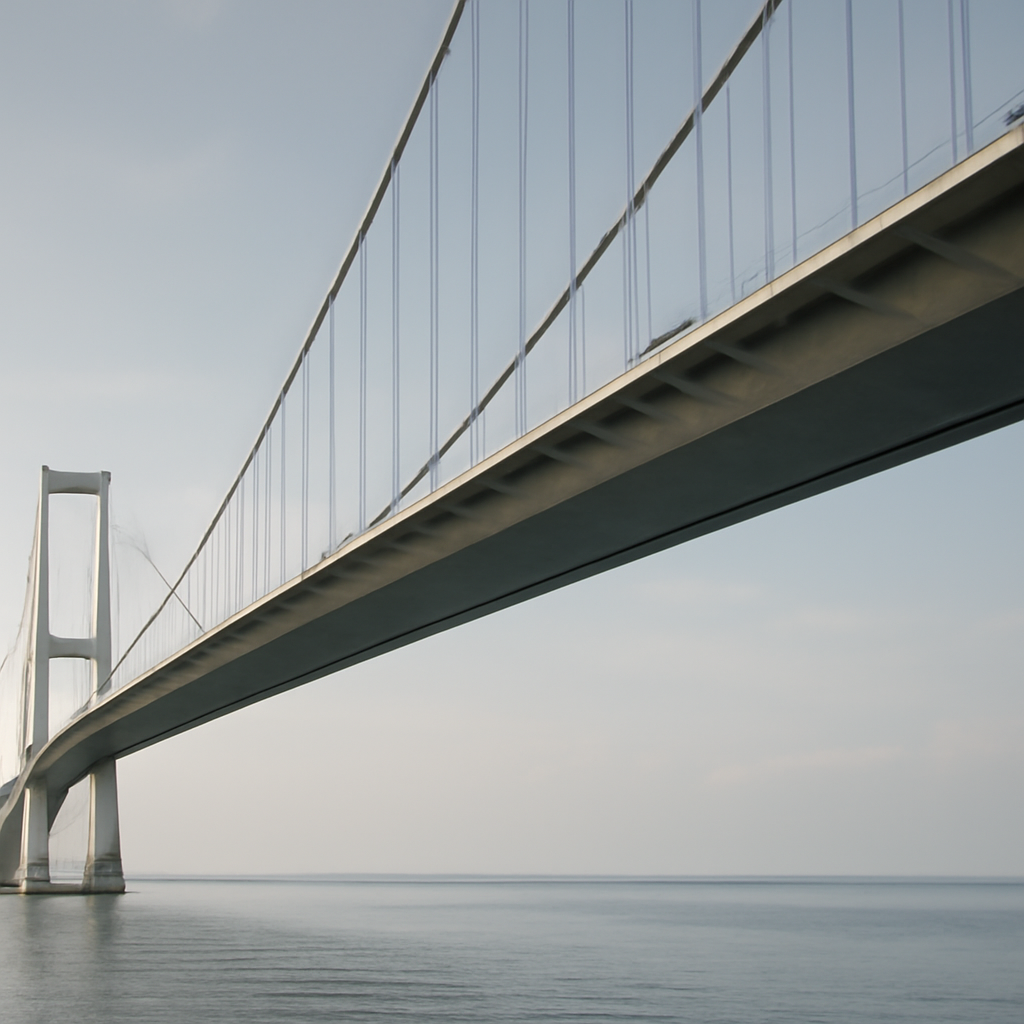
Bridges, especially long-span suspension and cable-stayed bridges, must be flexible. A perfectly rigid structure would be heavy and inefficient, and it would attract large forces during wind and earthquakes. Designers instead aim for a structure that can move without accumulating damage, while keeping stresses, deflections, and accelerations within acceptable limits. Managing sway is largely about managing dynamics—mass, stiffness, and damping—and shaping how wind interacts with the deck.
Aerodynamics: Shaping the Deck to Calm the Wind
One of the most powerful tools is making the bridge deck “wind-friendly.” Deck cross-sections are often streamlined or detailed so airflow stays attached longer and separates in a less harmful way. Common aerodynamic strategies include:
- Streamlined or box-girder decks: enclosed box sections can be torsionally stiff and can be shaped to reduce problematic flow separation.
- Edge fairings and guide vanes: add-ons that modify airflow at the deck edges to reduce vortex shedding and improve stability.
- Openings or grating in the deck (in some designs): allowing some air to pass through can reduce uplift and pressure differences, depending on the structural system and roadway needs.
These choices are validated through testing and analysis because small geometric changes can significantly alter aerodynamic behavior.
Tuning the Structure: Stiffness, Mass, and Natural Frequencies
Every bridge has natural frequencies—preferred vibration “notes.” If wind gusts or vortex shedding repeatedly excite one of these frequencies, motion can amplify. Designers manage this by tuning the structure’s dynamic properties:
- Increase stiffness where it matters: torsional stiffness (resistance to twisting) is especially important for long-span decks.
- Adjust mass distribution: changes in deck weight, cable sizes, or structural layout can shift frequencies away from problematic ranges.
- Refine the structural system: suspension, cable-stayed, truss-stiffened, and box-girder solutions behave differently under wind and may be selected based on site wind climate and span length.
Adding Damping: Turning Motion into Heat
Damping is what makes vibrations die out. While materials and connections provide some inherent damping, long flexible bridges often need supplemental devices to control movement and improve comfort. Common approaches include:
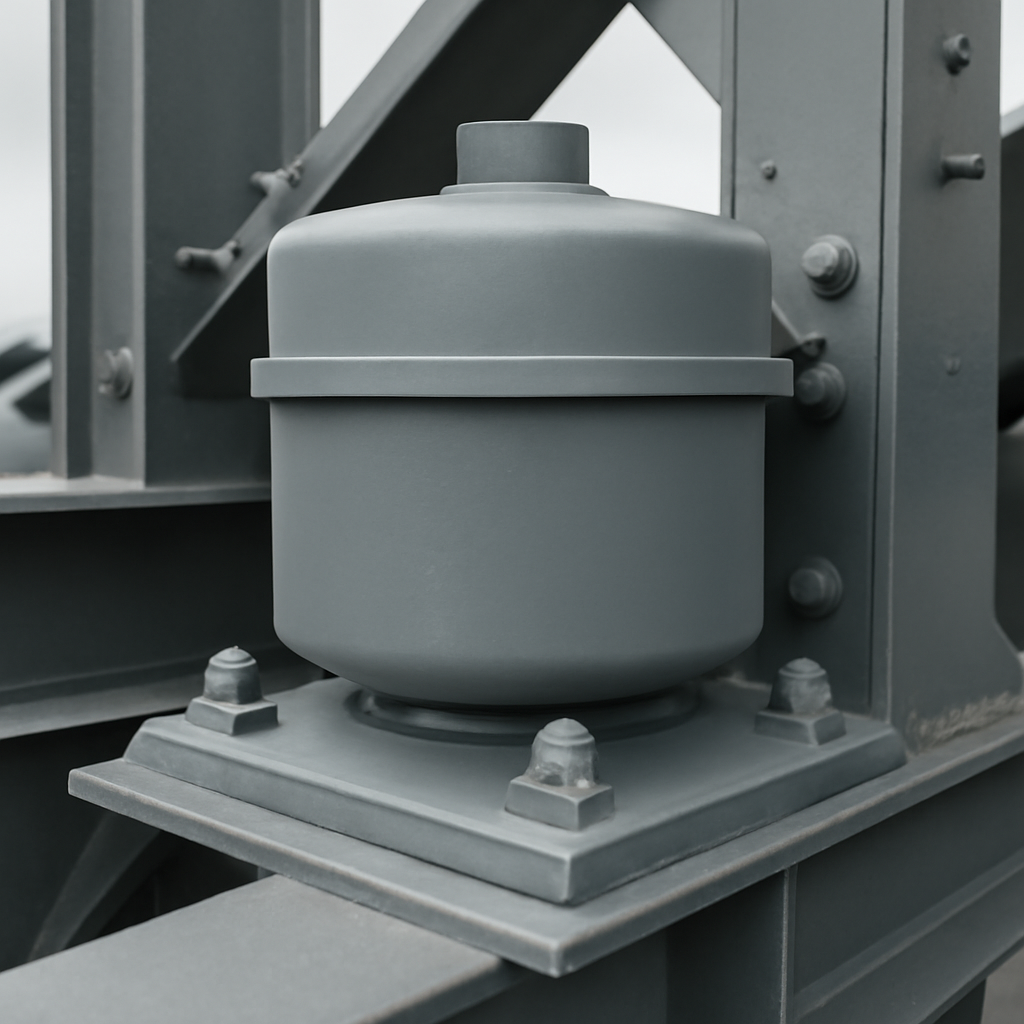
- Tuned mass dampers (TMDs): a secondary mass on springs/dampers that moves out of phase with the bridge motion to reduce vibration near a target frequency.
- Tuned liquid dampers (TLDs): tanks of water or other fluids that slosh in a controlled way, dissipating energy.
- Viscous dampers: devices that resist motion with velocity-dependent force, useful for reducing dynamic responses and sometimes for seismic performance as well.
- Cable dampers: installed to reduce rain-wind-induced vibrations or other oscillations in stay cables.
Wind Tunnel Testing and Computational Modeling
For major long-span bridges, wind engineering is not based on rules of thumb. Designers commonly use a combination of:
- Site wind studies: local terrain, topography, and seasonal patterns influence turbulence and extreme wind speeds.
- Boundary-layer wind tunnel tests: scaled models are exposed to simulated atmospheric turbulence to measure forces, motions, and aeroelastic stability.
- Section model tests: focus on the deck cross-section to evaluate flutter and vortex-induced vibration characteristics.
- Computational fluid dynamics (CFD) and structural simulations: used to explore design options and complement physical testing (with careful validation).
These steps help engineers verify that the bridge remains stable and serviceable across expected wind conditions, including rare events used for design.
Operational Strategies: When the Weather Wins
Even with robust design, extreme winds can require operational controls. Bridge owners may implement wind monitoring and management measures such as:
- Anemometers and structural sensors to track wind speed, direction, and bridge response in real time.
- Traffic restrictions for high-sided vehicles during strong crosswinds.
- Speed reductions or temporary closures under predetermined wind thresholds when safety or vehicle stability could be compromised.
These policies recognize that user safety is a system problem: the bridge, vehicles, and wind all interact.
Learning from History (Without the Myths)
Engineering practice evolved substantially after early long-span bridges revealed how sensitive flexible decks can be to aeroelastic effects. Modern bridge aerodynamics, torsional stiffness, and testing standards were strengthened because of those lessons. Today’s designers explicitly check for aerodynamic instability (including flutter) and validate performance through analysis and, for landmark spans, wind tunnel testing.
How Engineers Define “Acceptable” Sway
A bridge can be safe and still move. Designers typically evaluate multiple limit states, including:
- Strength and stability: members, connections, and foundations must remain within safe stress and stability margins under design wind events.
- Serviceability: deflections and vibrations should not damage components or cause maintenance issues.
- User comfort: excessive acceleration can feel uncomfortable even if it’s structurally safe; designers aim to keep vibrations within comfortable ranges for drivers and pedestrians.
- Fatigue and durability: repeated wind-induced cycles can accumulate damage over time, especially in cables, welds, and connections.
Takeaway: Stable Bridges Aren’t Rigid—They’re Well-Controlled
Bridge designers manage wind and sway by combining aerodynamic shaping, carefully tuned stiffness and mass, added damping, and rigorous testing. The result is a structure that can move when it needs to—without losing stability or comfort. The next time you feel a subtle sway on a big bridge, you’re often experiencing not a flaw, but a carefully engineered response to a constantly changing environment.